Showing posts with label Carbohydrates. Show all posts

Wednesday, March 28, 2012


3 CARBOHYDRATE BIOGENESIS
One of the most vital aspects of pharmacognosy which has gained paramunt importance and legitimate recognition in the recent past is the intensive and extensive studies involving the various biochemical pathways that has ultimately led to the production of ‘secondary constituents’ invariably employed as ‘drugs’. This type of specific and elaborated study is frequently termed as biogenesis or drug biosynthesis. It is quite pertinent to mention here that as it is absolutely necessary for a medicinal chemist to understand the intricacies of chemical synthesis of a potent drug substance, such as:
naproxen, chloramphenicol etc., exactly in the same vein a pharmacognosist must possess a thorough knowledge of the biogenesis of drugs of natural origin.
A Swiss chemist G. Trier, as far back in 1912, not only predicted but also postulated that amino acids and their corresponding derivatives invariably act as the precursors of relatively complex naturally occurring alkaloids mostly used as potent therapeutic agents. Interestingly, soonafter the second half of the twentieth century, there had been a tremendous progress in the era of isotopically labelled organic compounds that facilitated the affirmation as well as confirmation of the earlier
speculated theories. With the advent of most advanced knowledge in sciences it has been established that the carbohydrate biogenesis usually takes place due to the Photosynthesis from carbon dioxide (CO2) as the starting material occurring abundantly both in all plants and in certain purple bacteria as depicted below:

Calvin and coworkers established the various steps involved in the chemical reactions ultimately leading to the overall Eq. (a). They have also shown that D-ribose-1, 5-diphosphate is the primary acceptor of CO2. However, the exact mechanism of this particular step whereby CO2 gets assimilated has been studied at length with radio labelled 14CO2 and Chiorella (a fresh water algae).
Besides, the following Eq. (b) evidently illustrates the distribution of radiocarbon originating from 14CO2after completion of one full photosynthetic cycle:

From Eq. (b) it may be inferred that a triose phosphate having the identified radiocarbon distribution shall ultimately result after completing a single full cycle. It would most logically lead to hexose phosphate which should invariably contain relatively higher amounts of 14CO2 (i.e., radio labelled carbon), till such time after a series of recycling slots, give rise to an even distribution of radio active carbon spread over the entire hexose molecule.

2.2.4.2 Chitin Chitin, is the nitrogen containing polysaccharide which invariably occurs in certain fungi e.g., ergot. It is also commonly found in some invertebrate animals eg, crab, shrimp, lobsterspecifically located in the exoskeleton of the body. Besides, it is located in the appendages of insects and crustaceans.
Biological Source The mycelia of Penicillium species contain approximately 20% of chitin. The relatively hard crustacean shells of crab and lobster are reported to contain 15 to 20% chitin, whereas the rather soft crustacean shells of shrimp contain between 15 to 30% chitin. It is found in the spores of many fungi and yeasts.
Preparation The hard or soft crustacean shells are first ground to fine powder and then treated with dilute HCl (5%) for a duration of about 24 hours whereby most of the calcium* and other impurities are eliminated completely as soluble CaCl2. The above extract containing the proteins derived from the shells are eliminated by treating it with proteolytic enzymes like pepsin or trypsin.

-------------------------------------------------------------
* Crustacean shell contain approx. 60-75% of calcium carbonate.

The resulting pink coloured liquid extract is bleached by H2O2 in an acidic medium for 5-6 hours at room temperature. The bleached product is subjected to deacetylation at 120oC with a mixture of 3 parts of KOH, 1 part EtOH and 1 part ethylene glycol. The deacetylation process is repeated several times till the ‘acetyl content’ reaches a minimum level. Chitin is obtained as an amorphous solid substance.
Description It is an amorphous solid. It is practically insoluble in water, dilute acids, dilute and concentrated alkalies, alcohol and other organic solvents. It is soluble in concentrated HCl, H2SO4, anhydrous HCOOH and H3PO4(78-97%). There exists a wide difference with regard to the solubility, molecular weight, acetyl value and specific rotation amongst chitins of different origin and obtained from different methods.
Chemical Constituents Chitin may be regarded as a derivative of cellulose, wherein the C-2 hydroxyl groups have been duly replaced by acetamido residues. In fact, it is more or less a cellulose like biopolymer mainly consisting of unbranched chains of β-(1→4) -2- acetamido -2-deoxy-Dglucose. It is also termed as N-acetyl-D-glucosamine. It contains about 6.5% of nitrogen.

Chemical Tests
1. Chitin affords a brown colour with Iodine solution which turns into red violet on acidification with sulphuric acid.
2. Chitin sulphate gives rise to a characteristic strain with acidic dyes, such as: picric acid and fuchsin.
3. When chitin is heated with strong KOH solution under pressure it fails to dissolve, but undergoes deacetylation to form acetic acid and other products collectively termed as chitosans.
4. Hydrolysis of chitin in the presence of strong mineral acids forms acetic acid and glucosamine.
5. When chitin is dissolved in dilute nitric acid (50%) and allowd to crystallise overnight it forms beautiful spherocrystals of chitosan. These crystals on being examined under polarised light, by making use of crossed nicols, a distinct cross is observed.
Uses
1. Chitosan i.e., deacetylated chitin, finds its application in water treatment operations.
2. It is used in pholographic emulsions.
3. It is used in improving the dyeability of synthetic fibers and fabrics.
4. Therapeutically it is used in wound healing preparations.
5. It shows considerable adhesivity to plastics and glass.
6. It is used as a sizing agent for cotton, wool, rayon and for synthetic fibers.

2.2.4.1 Xanthan Gum
Synonyms Polysaccharide B-1459; Keltrol F; Kelzan.
Biological Source The Polysaccharide Gum is produced by the bacterium Xanthomonas campestris on certain suitable carbohydrates.
Preparation One of the latest techniques of ‘biotechnology’ i.e., ‘recombinant DNA technology’ has been duly exploited for the commercial production of xanthan gum.
Methodology: First of all the genomic banks of Xanthomonas campestris are meticulously made in Escherichia coli by strategically mobilizing the broad-host-range cosmids being used as the vectors. Subsequently, the conjugal transfer of the genes take place from E. coli into the nonmucoid X. campestris. Consequently, the wild type genes are duly separated by virtue of their unique ability to restore mucoid phenotype. As a result, a few of the cloned plasmids incorporated in the wild type strains of X. campestris shall afford an increased production xanthan gum.
Interestingly, the commercial xanthan gums are available with different genetically controlled composition, molecular weights and as their respective sodium, potassium or calcium salts.
Description It is a cream coloured, odourless and free flowing powder. It dissolves swiftly in water on shaking and yields a highly viscous solution at relatively low concentrations. The aqueous solutions are extremely pseudoplastic in character. It gives rise to a strong film on evaporation of its aqueous solutions. It is fairly stable and resistent to thermal degradation. The viscosity is independent of temperature between 10 to 70oC. It is fairly compatible with a variety of salts.
Chemical Constituents Xanthan gum is composed of chiefly D-glucosyl, D-mannosyl and Dglucosyluronic acid residues along with variant quantum of O-acetyl and pyruvic acid acetal. The primary structure essentially comprises of a cellulose backbone with trisaccharide side chains and the repeating moiety being a pentasaccharide.
Uses
1. Its potential in chemically enhanced oil recovery is well known.
2. The inherent pseudoplastic property of its aqueous solutions rendered both toothpastes and ointments in enabling them to hold their shape and also to spread readily.
3. It is extensively employed in pharmaceuticals due to its superb suspending and emulsifying characteristic features.

2.2.4 Microbial Gums
Microbial Gums are produced by certain selected miroorganisms in the course of fermentation. The resulting exopolysacharides are usually isolated from the fermentation broth by appropriate procedures.
A few typical examples are described below, for instance: Xanthan Gum; Chitin.

2.2.3.3 Carrageenan
Synonyms Irish moss; Chondrus.
Biological Source Carrageenan refers to closely associated hydrocolloids which are obtained from different red algae or seaweeds. The most important sources of carrageenan are namely: Chondrus crispus (Linn.) stockhouse and Gigartina mamillosa (Goodnough and Woodward) J. Agardh belonging to the family Gigartinaceae).
Geographical Source The plants are abundantly found along the north-western coast of France, the coast of Nova Scotia, and the British Isles.
Preparation In general, the plants are collected mostly during June and July, and spread out on the bench for natural drying. They are then exposed to the sun rays directly whereby bleaching takes place. Now, they are treated with a brine solution, and ultimately dried and stored.
Description The Chondrus is more or less an allusion to the cartilage-like characteristic features of the dry thallus; whereas Gigartina is an absolute allusion specifically to the fruit bodies which appear as raised tubercles on the thallus.
Chemical Constituents The carrageenan bears a close physical resemblance to agar. However, its hydrocolloids are mostly galactans having sulphate esters, which are present in excess amount in comparison to agar. Carrageenan polysaccharides essentially comprise of chains of 1, 3 linked β – (+) – galactose and 1,4-linked α- (+) – galactose moieties that are invariably substituted and later on
modified to the 3, 6- anhydro derivative. In fact, carrageenans may be further separated into three major components, namely: k-carrageenan; i-carrageenan; and λ carrageenan.
Uses
1. Both k-and i-carrageenans proved to be good gelating agents because of the fact that they tend to orient in stable helics when in solution.
2. The λ-carrageenan does not form stable helics and hence represent the nongelling portion of the carrageenans which serves as a more useful thickner.
3. The fairly stable texture and supported by excellent rinsability of the hydrocolloids these are immensely useful in the formulations of toothpastes.
4. They are used as bulk laxative.
5. They are employed as a demulscent.
6. They constitute as an important ingredient in a large number of food preparations.

Tuesday, March 27, 2012

2.2.3.2 Agar
Synonyms Agar-agar; Gelose; Japan-agar; Chinese-isinglass; Bengal isinglass; Ceylon isinglass; Layor carang; Vegetable gelatin.
Biological Source Agar is the dried hydrophilic colloidal polysaccharide complex extracted from the agarocytes of algae belonging to the class Rhodophyceae. It is also obtained as the dried gelatinous substance from Gelidium amansii belonging to the family Gelidaceae and several other species of red algae, such as Gracilaria (family: Gracilariaceae) and Pterocladia (Gelidaceae). The predominant agar-producing genera are, namely; Gelidium; Gracilaria; Acanthopeltis; Ceramium and Pterocladia.
Geographical Source Agar is largely produced in Japan, Australia, India, New Zealand, and USA. It is also found in Korea, Spain, South Africa and in the Coastal regions of Bay of Bengal (India) together with Atlantic and Specific Coast of USA.
Preparation It is an usual practice in Japan where the red-algae is cultivated by placing poles or bamboos spread in the ocean which will serve as a support and shall augment the growth of algae on them. During the months of May and October the poles are removed and the algae are carefully stripped off from them. The fresh seaweed thus collected is washed thoroughly in water and subsequently extracted in digestors containing hot solution of dilute acid (1 portion of algae to 60 portions of diluted acid). The mucilagenous extract is filtered through linen while hot and collected in large wooden troughs to cool down to ambient temperature so as to form solid gel. The gel is mechanically cut into bars and passed through a wire netting to form strips. The moisture from the strips is removed by successive freezing and thawing* and finally sun dried and stored as thin agar strips.
Alternatively, the mass of gel if frozen and subsequently thawed and the dried agar is obtained by vaccum filtration. The crude agar is usually formed as flakes which can be powdered and stored accordingly.

* To bring down to room temperature from –20 to –30oC.

Description
Colour : Yellowish white or Yellowish grey
Odour : Odourless
Taste : Bland and mucilaginous
Shape : It is available in different shapes, such as: bands, strips, flakes, sheets and coarse powder
Size : Bands: width = 4cm; Length = 40 to 50 cms
Sheets: Width = 10-15cm; Length = 45 to 60 cms
Strips: Width = 4mm; Length = 12 to 15 cms
India produces about 250 MT of good quality agar using Galidiella accrosa as the raw material. It is insoluble in cold water in organic solvents. It readily dissolves in hot solutions and it forms a translucent solid mass which characteristic is very useful in microbiology for carrying out the Standard Plate Count.
Chemical Constituents Agar can be separated into two major fractions, namely: (a) Agarose-a neutral gelling fraction; and (b) Agaropectin—a sulphated non-gelling fraction. The former is solely responsible for the gel-strength of agar and consists of (+) –galactose and 3,6-anhydro-(–)-galactose moieties; whereas the latter is responsible for the viscosity of agar solutions and comprises of sulphonated polysaccharide wherein both uronic acid and galactose moieties are partially esterified with sulphuric acid. In short, it is believed to be a complex range of polysaccharide chains having alternating α–(1→3) and β–(1-4) linkages and varying total charge content.
Chemical Tests
1. It gives a pink colouration with Ruthenium Red solution.
2. A 1.5-2.0% (w/v) solution of agar when boiled and cooled produces a stiff-jelly.
3. Prepare a 0.5%(w/v) solution of agar and add to 5 ml of it 0.5 ml of HCl, boil gently for 30 minutes and divide into two equal portions:
(a) To one portion add BaCl2 solution and observe a slight whitish precipitate due to the formation of BaS04 (distinction from Tragacanth), and
(b) To the other portion add dilute KOH solution for neutralization, add 2 ml of Fehling’s
solution and heat on a water bath. The appearance of a brick red precipitate confirms the presence of galactose.
Substituents/Adulterants Gelatin and isinglass are usually used as substituents for agar.
Uses
1. It is used in making photographic emulsions.
2. It is also employed as a bulk laxative.
3. It is extensively used in preparing gels in cosmetics.
4. It is widely used as thickening agent in confectionaries and dairy products.
5. It is used in the production of ointments and medicinal encapsulations.
6. In microbiology, it is employed in the preparation of bacteriological culture media.
7. It is used for sizing silks and paper.
8. It finds its enormous usage in the dyeing and printing of fabrics and textiles.
9. It is also used as dental impression mould base.
10. It is employed as corrosion inhibitor.
2.2.3.1 Algin
Synonyms Sodium alginate; Alginic acid sodium; Sodium polymannuronate; Kelgin; Minus; Protanal;
Biological Source Algin is a gelling polysaccharide extracted from the giant brown seaweed (giant kelp. Macrocystis pyrifera (L.) Ag., Lessoniaceae) or from horsetail kelp (Laminaria digitata (L.) Lamour, Laminariaceae) or from sugar kelp (Laminaria saccharina (L.) Lamour). Some other common species are Laminaria hyperborea and Ascophyllum nodosum
Geographical Source The different varieties of seaweeds are invariably found in the Pacific and Atlantic Oceans, more specifically along the coastal lines of USA, Canada, Scotland, Japan and Australia. In India the Western coast of Saurashtra is also a potential source of algin. However, USA, and UK are the largest producers of algin in the world.
Preparation The algin (or sodium alginate) is the sodium salt of alginic acid which is a purified carbohydrate extracted from brown seaweed (algae) by the careful treatment with dilute sodium hydroxide. The brown colour of the crude algin is due to the presence of a carotenoid pigment
associated with it which may be eliminated by treating the aqueous solution with activated carbon and spray drying the powder.
Description
Colour : Yellowish-white, cream coloured, buff coloured
Odour : Odourless
Taste : Tasteless
Solubility : Insoluble in alcohol, ether, chloroform and strong acids, freely soluble in water
Viscosity : A 1% (w/v) aqueous solution at 20°C may show a viscosity ranging between 20-400 centipoises.
Chemical Constituents Alginic acid is mainly comprised of D-mannuronic acid residues which on methylation and hydrolysis gives rise to the formation of 2,3 dimethyl-D- mannuronide. Therefore, the ring as well as bridge oxygen atoms involve C-4 and C-5 and the carboxyl groups are absolutely free to react (to form sodium salts), whereas the aldehydic moieties are duly utilized by the respective glycosidic linkages. It has been observed that these mannuronic acid entities are joined by β-1, 4-glycosidic linkages. The resulting structure could be either linear or very slightly branched.

 
Chemical Tests
1. The aqueous solution of algin gives an instant white copious precipitate with calcium chloride solution.
2. A 1% (w/v) aqueous solution of algin yields a heavy gelatinous precipitate with diluted sulphuric acid.
3. It is not precipitated by saturated ammonium sulphate solution (distinction from agar and tragacanth)
4. It gives effervescence (liberates CO2) with carbonates.
5. It readily reacts with compounds having ions of alkali metals (e.g., Na+, K+, Li+) or ammonium (NH4+) or magnesium (Mg2+ ) to produce their respective alginates (salts) that are water soluble and forms thick and viscous solutions characteristic of hydrophillic colloids.
Uses
1. It is extensively used in the manufacture of ice-creams where it serves as a stabilizing colloid, ensuring creamy texture thereby checking the growth of ice-flakes (or crystals).
2. It is also used in the flocculation of suspended solids in most water treatment plants.
3. It is employed as a stabilizing and thickening agent in food and pharmaceutical industry.
4. It is used as a film and film-forming agent in the rubber and paint industry.
5. It is widely used in the textile industry as absorbable haemostatic dressings.
6. It is employed as a binding and distintegrating agent for tablets and lozenges.
2.2.3 Marine Gums
A variety of algae and seaweeds comprise of marine gums as components of cell walls and membranes or present in the intracellular regions where they actually serve as reserve food material.
2.2.2.4 Guar Gum
Synonyms Guar flour; Decorpa; Jaguar; Gum cyamopsis; Cyamopsis gum; Burtonite V-7-E.
Biological Source Guar gum is the ground endosperms of Cyamopsis tetragonolobus (L.) Taub; belonging to family Leguminoseae.
Geographical Source It grows abundantly in tropical countries like: Indonesia, India, Pakistan and Africa. In USA, southern western regions it was introduced in the year 1900 and its large-scale production commenced in early 1950’s.
Preparation First of all the fully developed white seeds of Guar gum are collected and freed from any foreign substances. The sorted seeds are fed to a mechanical ‘splitter’ to obtain the bifurcated guar seeds which are then separated into husk and the respective cotyledons having the ‘embryo’. The gum is found into the endosperm. Generally, the guar seeds comprise of the following:
Endosperm : 35 to 40%
Germ (or Embryo) : 45 to 50%, and
Husk : 14 to 17%
The cotyledons, having a distinct bitter taste are separated from the endosperm by the process called ‘winnowing’. The crude guar gum i.e., the endosperms is subsequently pulverised by means of a ‘micro-pulveriser’ followed by grinding. The relatively softer cotyledons sticking to the endosperms are separated by mechanical ‘sifting’ process. Thus, the crude guar-gum is converted to a purified form (i.e., devoid of cotyledons), which is then repeatedly pulverized and shifted for several hours till a final white powder or gramular product is obtained.
Description
Colour : Colourless; Pale-yellowish white powder
Odour : Characteristic smell
Taste : Mucilagenous
Solubility : Insoluble in alcohol with water it gives a thick transparent suspension
Chemical Constituents It has been found that the water soluble fraction constitutes 85% of Guar gum and is commonly known as Guaran. It essentially consists of linear chains of (1 → 4) –β-D mannopyranosyl units with α–D-galactopyranosyl units attached by (1 → 6) linkages. However, the ratio of D-galactose to D-mannose is 1:2.

Chemical Tests
1. On being treated with iodine solution (0.1 N) it fails to give olive-green colouration.
2. It does not produce pink colour when treated with Ruthenium Red solution (distinction from sterculia gum and agar)
3. A 2% solution of lead acetate gives an instant white precipitate with guar gum (distinction from sterculia gum and acacia)
4. A solution of guar gum (0.25 g in 10 ml of water) when mixed with 0.5 ml of benzidine (1% in ethanol) and 0.5 ml of hydrogen peroxide produces no blue colouration (distinction from gum acacia).
Uses
1. It is used therapeutically as a bulk laxative.
2. It is employed as a protective colloid.
3. It is also used as a thickner and its thickening property is 5 to 8 times more than starch.
4. It finds its use in peptice ulcer therapy.
5. It is used as an anorectic substance i.e., it acts as an appetite depressant.
6. It is employed both as a binding and a disintegrating agent in tablet formulations.
7. It is used in paper sizing.
8. It is abundantly employed as film forming agent for cheese, salad dressing, ice-cream and soups.
9. It is used in pharmaceutical jelly formulations.
10. It is widely used in suspensions, emulsions, lotions, creams and toothpastes.
11. It is largely used in mining industry as a flocculant and also as a filtering agent.
12. It is also employed in water treatment plants as a coagulant aid.
2.2.2.3 Locust Bean Gum
Synonym Carob Flour; Arobon; Carob Gum; Ceratonia; Johannisbrotmehl;
Biological Source The Gum essentially consists of the hydrocolloid from the powdered endosperm of tree pods of Ceretonia siliqua Linn, belonging to the family Leguminoseae (St. John’s bread). It normally takes about 15 long years for a full-grown tree to yield seeds which , therefore, restricts the provision of a regular production of the gum to cater for the ever-expanding needs for the hydrocolloids.
Geographical Source The tree is found in abundance in Egypt, Cyperus and Sicily. It is very sensitive to low temperature. It is also commercially grown in countries like: Algeria, Greece, Israel, Italy, Morocco, Portugal and Spain.
Preparation The locust bean pods comprise of about 90% pulp and 8% kernnels. The kernnels are separated from the pods mechanically by means of Kibbling Machine. The kernnels comprise of mainly the endosperm (42-46%), husk (30-33%) and germ to the extent of 25%. First of all the seeds are duly dehusked and splitted lengthwise the seeds are duly dehusked and splitted lengthwise to facilitate the separation of the endosperm from the embryo* (i.e., the yellow germ). The dried gum is pulverised and graded as per the mesh-size e.g., 150, 175 and 200 mesh sizes available in the European market.
Description
Colour : Translucent white, yellow green
Odour : Odourless
Taste : Tasteless and mucilaginous. Acquires a leguminous taste when boiled with water
Solubility : Insoluble in alcohol. Dispersable in concentration upto 5%
Viscosity : As it is a neutral polysaccharide, hence pH has no effect on viscosity between
3-11.
Chemical Constituents Locust bean gum comprises of proteins, for instance: albumins, globulins and glutelins; carbohydrates, such as: reducing sugar, sucrose, dextrins, and pentosans; besides ash, fat, crude fiber and moisture.

* Embryo enhances the rate of fermentation of gum solutions and hence it must be removed as completely as possible.

Chemical Tests The mucilage of this gum when gently boiled with 5% KOH solution it yields a clear solution; but agar and tragacanth gives rise to a yellow colour, whereas karaya gum produces a brown colour.
Substituent Adulterant In food industry it is employed as a substitute for strach.
Uses
1. It is used as a stabilizer, thickner and binder in foods and cosmetics.
2. It is widely employed as a sizing and finishing agent in textiles.
3. It finds its abundant use as fiber - bonding in paper manufacture.
4. It is used as an adsorbent - demulcent therapeutically.
5. It is employed as drilling mud additive.
2.2.2.2 Pectin Pectin, in general, is a group of polysaccharides found in nature in the primary cell walls of all seed bearing plants and are invariably located in the middle lamella. It has been observed that these specific polysaccharides actually function in combination with both cellulose and hamicellulose as an intercellular cementing substance. One of the richest sources of pectin is lemon or orange rind which contains about 30% of this polysaccharide.
Pectin is naturally found in a number of plants namely: lemon peel, orange peel, apple pomace, carrots, sunflower-heads, guava, mangoes and papaya. The European countries, Switzerland and USA largely produce pectin either from apple pomace or peels of citrus fruits. Evaluation and standardization of pectin is based on its ‘Gelly-Grade’ that is, its setting capacity by the addition of sugar. Usually, pectin having ‘gelly grade’ of 100, 150 and 200 are recommended for medicinal and food usuages.
Biological Sources Pectin is the purified admixture of polysaccharides, obtained by carrying out the hydrolysis in an acidic medium of the inner part of the rind of citrus peels, for instance: Citrus limon (or Lemon) and Citrus aurantium belonging to the family Rutaceae, or from apple pomace Malus sylvestris Mill (Syn: Pyrus malus Linn, family: Rosaceae).
Geographical Source Lemon and oranges are mostly grown in India, Africa and other tropical countries. Apple is grown in the Himalayas, California, many European countries and the countries located in the Mediterranean climatic zone.
Preparation The specific method of preparation of pectin is solely guided by the source of raw material i.e., lemon/orange rind or apple pomace; besides the attempt to prepare either low methoxy group or high methoxy group pectins.
In general, the preserved or freshly obtained lemon peels are gently boiled with approximately 20 times its weight of fresh water maintained duly at 90ºC for a duration of 30 minutes. The effective pH (3.5 to 4.0) must be maintained with food grade lactic acid/citric acid/tartaric acid to achieve maximum extraction. Once the boiling is completed the peels are mildly squeezed to obtain the liquid portion which is then subjected to centrifugation to result into a clear solution. From this resulting solution both proteins and starch contents are suitably removed by enzymatic hydrolysis. The remaining solution is warmed to deactivate the added enzymes. The slightly coloured solution is effectively decolourized with activated carbon or bone charcoal. Finally, the pectin in its purest form is obtained by precipitation with water-miscible organic solvents (e.g., methanol, ethanol, acetone), washed with small quantities of solvent and dried in a vaccum oven and stored in air-tight containers or polybags.
Note: As Pectin is fairly incompatible with Ca2+, hence due precautions must be taken to avoid the contact of any metallic salts in the course of its preparation.
Description
Appearance : Coarse or fine- powder
Colour : Yellowish white
Odour : Practically odourless
Taste : Mucilaginous taste
Solubility : 1. Completely soluble in 20 parts of water forming a solution containing negatively charged and very much hydrated particles. 2. Dissolves more swiftly in water, if previously moistened with sugar syrup, alcohol, glycerol or if first mixed with 3 or more parts of sucrose.
Chemical Constituents Pectin occurs naturally as the partial methyl ester of a (1→4) linked (+) – polygalacturonate sequences interrupted with (1–2) – (–) – rhamnose residues. The neutral sugars
that essentially form the side chains on the pectin molecules are namely: (+) – galactose, (–) –arabinose, (+) – xylose, and (–) – fructose. Schneider and Bock (1938) put forward the following probable structure for pectin galacturonan:

Chemical Tests
1. A 10% (w/v) solution gives rise to a solid gel on cooling.
2. A transparent gel or semigel results by the interaction of 5 ml of 1% solution of pectin with 1 ml of 2% solution of KOH and subsequently setting aside the mixture at an ambient temperature for 15 minutes. The resulting gel on acidification with dilute HCl and brisk shaking yields a voluminous and gelatinous colourless precipitate which on warming turns into white and flocculent.
Uses
1. It is employed mostly as an intestinal demulscent. It is believed that the unchanged molecules of polygalacturonic acids may exert an adsorbent action in the internal layers of the intestine, thereby producing a protective action along with Kaolin to prevent and control diarrhoea.
2. As a pharmaceutical aid pectin is used frequently as an emulsifying agent and also as a gelling agent preferably in an acidic medium.
3. It is employed extensively in the preparation of jellies and similar food products e.g., jams, sauces, ketchups.
4. Poectin in the form of pastes exerts a bacteriostatic activity and hence, is used frequently in the treatment of indolent ulcers and deep wounds.
5. A combination of pectin and gelatin find its application as an encapsulating agent in various pharmaceutical formulations to afford sustained-release characteristics.
2.2.2.1 Plantago Seed The origin of the word ‘Plantago’ is from the Latin and means sole of the foot, referring to the shape of the leaf. Likewise, ‘Psyllium’ is from the Greek and means fleadescribing the seed.
Synonyms Psyllium seed; Plantain seed; Flea seed; Ispaghula; Isapgol; Isabgul.
Biological Source It is the dried ripe seeds of Plantago psyllium L., or Plantago arenaria Waldst & Kit (P. ramosa Asch.) (Spanish or French psyllium seed) or of Plantago ovata (blond or Indian plantago seed) or of Plantago amplexicaulis belonging to the family: Plantaginaceae.
Geographical Source P. amplexicaulis is grown on the Panjab plains, Malwa and Sind and extending to Southern Europe. P. psyllium is an annual pubescent herb practically native to the Mediterranean countries. It is grown in France and constitutes the main bulk of the American imported psyllium seed. P. ovata is extensively grown in Pakistan; besides it is found to be native to Mediterranean countries and Asia.
Preparation The crops are grown usually on light, well drained sandy loamy soils; and during their entire growth peroid the climate must be cool and dry. The ripe and matured fruits are normally collected after a span of about three months. The seeds are separated by thrashing lightly on a solid support. The dust and foreign particles are removed by sieving and against a current of mederate air-blast.
Description
Colour : Pinkish grey to brown
Odour : No characteristic odour
Taste : Bland and mucilageous
Weight : 100 seeds weigh between 0.15-0.19 g
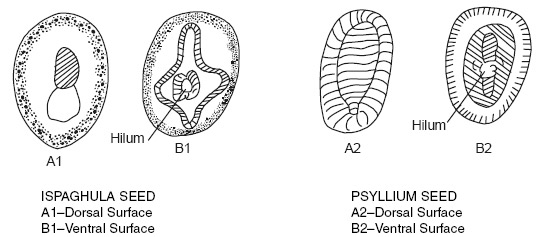
Figure 3.3 gives an account of the dorsal surface as well as the ventral surface of Ispaghula seed and Psyllium seed along with their overall shape, size and outersurface.
Chemical Constituents Plantago seeds generally comprise of approximately 10% of mucilage invariably located in the epidermis of the testa together with proteins and fixed oil. The mucilage essentially consists of pentosan and aldobionic acid.


Shape : Ovate or boat shaped
Size : Length = 1.8-3.5 mm, Width = 1.0-1.7 mm.
Outersurface: The Convex surface has a central brown oval spot, whereas the Concave surface bears a deep furrow having its hilum covered with a thin whitish membrane.


The various products of hydrolysis are, namely: xylose, arabinose, rhamnose and galacturonic acid.
Chemical Tests
1. Its mucilage gives a distinct red colouration on treatment with Ruthenium Red solution.
2. Swelling Factor*: It establishes the purity of the drug and ranges between 10 to 14. It is easily determined by transferring accurately 1.0g of the drug in a 25 ml measuring cylinder duly filled with 20 ml of water with intermittent shaking. The exact volume occupied by the seeds after a duration of 24 hours of wetting is noted carefully which represents the swelling factor of the seeds under investigation.
Substituents/Adulterants A number of species of Plantago have been studied extensively for their mucilage contents. Interestingly, Plantago rhodosperma which is particularly habitated in Missouri and Lousiana (USA) and Plantago wrightiana are worth mentioning. The former species contains mucilage to the extent of 17.5% whereas the latter contains about 23%. However, these two species compare favourably with the official drug.
In addition to the above, a few species like P. purshii, P. aristata and P. asiatica are also employed as a substitute for plantago seeds.
Uses
1. Plantago seeds are mostly employed as demulscent and in the treatment of chronic constipation.
2. It is also used in amoebic and bacillary dysentary.
3. Mucilage of the isapgol is invariably employed in the preparation of tablets (e.g., granulation)
4. It is used as a stabilizer in the ice-cream industry
5. The crushed seeds are employed as a poultice for rheumatic pain
6. The acid form of polysaccharide is obtained by carefully removing the cations from the mucilage by treatment with cation-exchange resins and spray drying the resultant products. This ‘specialized product’ finds its enormous applications as a tablet disintegrator, as enteric coating substance and finally employed in the sustained release drug formulations.
2.2.2 Seed Gums
Seed Gums are hydrocolloids contained in some seed embryos where they actually play the role as polysaccharide food reserves. A few typical examples of seed gums are described below, such as: Plantago seed; Pectin; Locust bean gum; and Guar gum.
2.2.1.3 Karaya Gum
Synonyms Gum Karaya; Kadaya; Katilo; Kullo; Kuteera; Sterculia; Indian Tragacanth; Mucara.
Biological Source Karaya Gum is the dried exudate of the tree Sterculia urens Roxb; Sterculia villosa Roxb; Sterculia tragacantha Lindley and other species of Sterculia, belonging to the family: Sterculeaceae. It is obtained from Cochlospermum Geographical Source: gossypium, De Candolle or other species of cochlospermum Kunth –family: Bixaceae.
Geographical Source The S. urens is found in India especially in the Gujarat region and in the central provinces.
Preparation The gum is obtained from the Sterculia species by making incisions and, thereafter, collecting the plant excudates usually after a gap of 24 hours. The large irregular mass of gums (tears) which weigh between 250 g to 1 kg approximately are hand picked and despatched to the various collecting centres. The gum is usually tapped during the dry season spreading over from March to June. Each healthy fully grown tree yields from 1 to 5 kg of gum per year; and such operations may be performed about five times during its lifetime. In short, the large bulky lumps (tears) are broken to small pieces to cause effective drying. The foreign particles e.g., pieces of bark, sand particles, leaves are removed. Thus, purified gum is available in two varieties, namely:
(a) Granular or Crystal Gum: Having a particle size ranging between 6 to 30 mesh, and
(b) Powdered Gum: Having particle size of 150 mesh
Description
Colour : White, pink or brown in colour
Odour : Slight odour resembling acetic acid
Taste : Bland and mucilageous taste
Shape : Irregular tears or vermiform pieces.
It is water insoluble but yields a translucent colloidal solution.
Chemical Constituents Karaya gum is partially acetylated polysaccharide containing about 8% acetyl groups and about 37% uronic acid residues. It undergoes hydrolysis in an acidic medium to produce (+)–galactose, (–)–rhamnose, (+)–galacturonic acid and a trisaccharide acidic substance. It contains a branched heteropolysaccharide moiety having a major chain of 1, 4-linked α–(+)–galacturonic acid along with 1, 2-linked (–)–rhamnopyranose units with a short (+)–glucopyranosyluronic acid containing the side chains attached 1→3 to the main chain i.e., (+)–galactouronic acid moieties.
Chemical Test It readily produces a pink colour with a solution of Ruthenium Red.
Substituent/Adulterant It is used as a substitute for gum tragacanth.
Uses
1. It is employed as a denture adhesive.
2. It is used as a ‘binder’ in the paper industry.
3. It is also employed as a thickening agent for dyes in the textile industry.
4. It is widely used as a stabilizer, thickner, texturizer and emulsifier in food
5. It is used as a bulk laxalive.
6. It finds its usage in lozenges.
7. It is employed extensively in wave set solution and in skin lotions.
8. It is used in preparations concerned with composite building materials.
2.2.1.2 Tragacanth
Synonym Gum Tragacanth
Biological Source The dried gummy exudation from Astragalus gummifer Labill. (white gavan)
or other Asiatic species of Astragalus belonging to the family of Leguminoseae.
Geographical Source It is naturally found in various countries, viz., Iran, Iraq, Armenia, Syria,
Greece and Turkey. A few species of Astragalous are located in India, viz., Kumaon, Garhwal and Punjab.Persian tragacanth are exported from Iran and North Syria, whereas the Smyrna tragacanth from the Smyrna port in Asiatic Turkey.
Collection The thorny shrubs of tragacanth normally grow at an altitude of 1000-3000 meters.
As an usual practice transverse incisions are inflicted just at the base of the stem, whereby the gum is given out both in the pith and medullary rays. Thus, the absorption of water helps the gum to swell-up and subsequently exude through the incisions. The gummy exudates are duly collected and dried rapidly to yield the best quality white product. It usually takes about a week to collect the gum exudates right from the day the incisions are made; and this process continues thereafter periodically.
Description
Colour: White or pale
Odour: Odourless
Taste: Tasteless
Shape: Curved or twisted ribbon –like flakes marked with concentric ridges that is indicative of successive exudation and solidification. Fracture is normally short and horny.
Size: Flakes are usually 25 × 12 × 12 mm.
Appearance: Translucent
Chemical Constituents Interestingly, tragacanth comprises of two vital fractions: first, being watersoluble and is termed as ‘tragacanthin’ and the second, being water-insoluble and is known as ‘bassorin’. Both are not soluble in alcohol. The said two components may be separated by carrying out the simple filtration of a very dilute mucilage of tragacanth and are found to be present in concentrations ranging from 60-70% for bassorin and 30-40% for tragacanthin. Bassorin actually
gets swelled up in water to form a gel, whereas tragacanthin forms an instant colloidal solution. It has been established that no methoxyl groups are present in the tragacanthin fraction, whereas the bassorin fraction comprised of approximately 5.38% methoxyl moieties. Rowson (1937) suggested that the gums having higher methoxyl content i.e., possessing higher bassorin contents, yielded the most viscous mucilages.
Chemical Test
1. An aqueous solution of tragacanth on boiling with conc. HCl does not develop a red colour.
2. Ruthenim Red* solution (0.1% in H2O) on being added to powdered gum tragacanth whereby the particles will not either acquire a pink colour or are merely stained lightly.
3. When a solution of tragacanth is boiled with few drops of FeCl3 [aqueous 10% (w/v)] it produces a deep-yellow precipitate.
4. It gives a heavy precipitate with lead acetate.
5. When tragacanth and precipitated copper oxide are made to dissolve in conc. NH4OH it yields a meagre precipitate.
Substituents/Adulterants Karaya gum which is sometimes known as sterculia gum or Indian tragacanth and is invariably used as a substitute for gum tragacanth.
Uses
1. It is used as a demulcent in throat preparations.
2. It is employed as an emolient in cosmetics (e.g., hand lotions).
3. It is used as a pharmaceutical aid as a suspending agent for insoluble and heavy powders in mixtures.
4. It is effectively employed as a binding agent for the preparation of tablets and pills.
5. It is also used as an emulsifying agent for oils and waxes.
6. A substantial amount find its application in calico printing and in confectionary.
7. It is used in making medicinal jellies e.g., spermicidal jelly.
8. A 0.2-0.3% concentration is frequently used as a stabilizer for making ice-creams and various types of sauces e.g., tomato sauce, mustard sauce.
9. It is used to impart consistence to troches.
10. The mucilages and pastes find their usage as adhesives.
-----------------------------------------------------------
* Ruthenium oxychloride ammoniated, Cl6H42N14O2Ru3, soluble in water and used in microscopy as reagent for pectin and gum.
2.2.1.1 Acacia
Synonyms Indian Gum; Gum Acacia; Gum Arabic.
Biological Source According to the USP, acacia is the dried gummy exudation from the stems and branches of Acacia senegal (L.) Willd; family; Leguminoseae, or other African species of Acacia.
It is also found in the stems and branches of Acacia arabica, Willd. Geographial Source The plant is extensively found in India, Arabia, Sudan and Kordofan (North- East Africa), Sri Lanka, Morocco, and Senegal (West Africa). Sudan is the major producer of this gum and caters for about 85% of the world supply.
Cultivation and Collection Acacia is recovered from wild as well as duly cultivated plants in the following manner, such as:
(a) From Wild Plants: The Gum after collection is freed from small bits of bark and other foreign organic matter, dried in the sun directly that helps in the bleaching of the natural gum to a certain extent, and
(b) From Cultivated Plants: Usually, transverse incisions are inflicted on the bark which is subsequently peeled both above and below the incision to a distance 2-3 feet in length and 2-3 inches in breadth. Upon oxidation, the gum gets solidified in the form small translucent beads, sometimes referred to as  ‘tears’. Tears of gum normally become apparent in 2-3 weeks, which is subsequently hand picked , bleached in the sun, garbled, graded and packed.
Description
Colour: Tears are usually white, pale-yellow and sometimes creamish-brown to red in colour. The power has an off-white, pale-yellow or light-brown in appearance.
Odour: Odourless (There is a close relationship between colour and flavour due to the
presence of tannins).
Taste: Bland and mucillagenous.
Shape & Size: Tears are mostly spheroidal or ovoid in shape and having a diameter of about 2.5-3.0 cm.
Appearance: Tears are invariably opaque either due to the presence of cracks or fissures pro-duced on the outer surface during the process or ripening. The fracture is usually very brittle in nature and the exposed surface appears to be glossy.
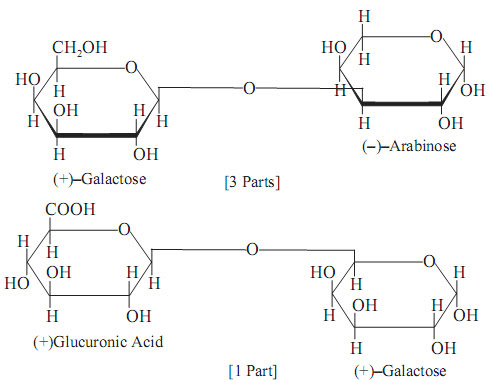
Chemical Constituents Acacia was originally thought to be composed only of  four chemical constituents, namely : (–) arabinose; (+) – galactose; (–)–rhamnose and (+) glucuronic acid.

On subjecting the gum acacia to hydrolysis with 0.01 N H2SO4 helps in removing the combined product of (–) – arabinose and (+) – galactose, whereas the residue consists of the product (+) – galactose and (+) – glucuronic acid. These two products are formed in the ratio of 3:1.

It also contains a peroxidase enzyme.

Chemical Tests
1. Lead Acetate Test: An aqueous solution of acacia when treated with lead-acetate solution it yields a heavy white precipitate.
2. Borax Test: An aqueous solution of acacia affords a stiff translucent mass on treatment with borax.
3. Blue Colouration due to Enzyme: When the aqueous solution of acacia is treated with benzidine in alcohol together with a few drops of hydrogen peroxide (H2O2), it gives rise to a distinct–blue colour indicating the presence of enzyme.
4. Reducing Sugars Test: Hydrolysis of an aqueous solution of acacia with dilute HCl yields reducing sugars whose presence are ascertained by boiling with Fehling’s solution to give a brick-red precipitate of cuprous oxide.
5. Specific Test: A 10% aqueous solution of acacia fails to produce any precipitate with dilute solution of lead acetate (a clear distinction from Agar and Tragacanth); it does not give any colour change with Iodine solution (a marked distinction from starch and dextrin); and it never produces a bluish-black colour with FeCl3 solution (an apparent distinction from tannins).
Uses
1. The mucilage of acacia is employed as a demulscent.
2. It is used extensively as a vital pharmaceutical aid for emulsification and to serve as a thickening agent.
3. It finds its enormous application as a binding agent for tablets e.g., cough lozenges.
4. It is used in the process of ‘granulation’ for the manufacture of tablets. It is considered to be the gum of choice by virtue of the fact that it is quite compatible with other plant hydrocolloids as well as starches, carbohydrates and proteins.
5. It is used in conjuction with gelatin to form conservates for microencapsulation of drugs.
6. It is employed as colloidal stabilizer.
7. It is used extensively in making of candy and other food products.
8. It is skillfully used in the manufacture of spray – dried ‘fixed’ flavours – stable, powdered flavours employed in packaged dry-mix products (puddings, desserts, cake mixes) where flavour stability and long shelf-life are important.