Showing posts with label Animals. Show all posts

Thursday, August 23, 2012

Honey (FENG MI)


Apis mellifera L. (Fam. Apidea)
Apis mellifera L. (Fam. Apidea)

Pharmaceutical Name:
Miel
Latin Name:
Apis cerana Fabricius or Apis mellifera L. (Fam. Apidea)
Common Name:
Part Used:
Honey
Miel is produced mainly in the provinces of Hu Bei, Si Chuan, Yun Nan, He Nan, Jiang Xi, Guang Dong, and Jiang Su. It is filtered or heated to remove
water for use.
Properties  Taste & Meridians:
Sweet in flavor, neutral in property, acts on the Spleen, Lung, and Large Intestine channels.
Functions:
Tonifies the Spleen and Stomach and relieves pain, moistens the lungs to stop cough, moistens the intestines to relax the bowels.
Indications & Combinations:
1. For lassitude and poor appetite, and for pain in the epigastrium. Honey has a tonifying function and is used to regulate other herbs. Tonics are often made into a bolus or soft extract with honey.
2. For chronic cough due to Lung Deficiency, dry cough due to Dryness of the Lung, it is used alone or with other herbs. For dry cough with hemoptysis due to Deficient Lung Yin, it is used with Radix Rehmanniae (Sheng Di Huang), Sclerotium Poriae Cocos (Fu Ling), and Radix Ginseng (Ren Shen).
3. For constipation due to dry intestines, it is taken alone with water once a day before meals or made into a suppository and inserted into the anus. Honey also removes toxins. It is applied externally to treat sores, swelling and scalds. It is taken internally to neutralize the toxicity of Radix Aconiti Lateralis Preparata (Zhi Fu Zi) and Radix Aconiti (Wu Tou).
Dosage and administration:
10–30 g, put into a decoction or used in pill or powder form. Proper amount for external use.
Precautions:
Not to be used in patients with accumulation of Damp-Heat, stuffiness in the chest, and loose stools due to Spleen Deficiency.

Wednesday, August 22, 2012

Blister beetle (BAN MAO)


Mylabris phalerata Pall.(Fam. Meloidae)
Mylabris phalerata Pall.(Fam. Meloidae)

Pharmaceutical Name:
Mylabris
Latin Name:
Mylabris phalerata Pall., Mylabris cichorii L. (Fam. Meloidae)
Common Name:
Blister beetle
Part Used:
Dried body
Mylabris is produced mainly in the provinces of Liaoning, Henan, Shandong, and Jiangsu. It is captured in summer and autumn. It is used unprepared after removing the head and limbs.
Properties  Taste & Meridians:
Pungent in flavor, cold in property, toxic.
Functions:
Removes toxins and erodes sores, removes blood stasis.
Indications & Combinations:
1. For sores, ulcers, carbuncles and scrofula, it may greatly irritate the skin, causing it to redden and then blister, so Mylabris should not be used for a long period of time.
2. For amenorrhea and masses in the abdomen. For amenorrhea, it is used with Radix et Rhizoma Rhei (Da Huang) and Semen Persicae (Tao Ren). Mylabris is also effective in the treatment of various types of cancers. Used for alopecia areata. It is soaked in wine and then applied topically to the extremities.
Dosage and administration:
0.03–0.06 g, used in pill or pow
Precautions:
When applied to the skin, Mylaris may cause redness and blisters. Therefore, it should be taken with care. It is contraindicated during pregnancy.

Monday, August 20, 2012

Flying squirrel feces (WU LING ZHI)


Pteromys volans L. (Fam. Petauristidae)
Pteromys volans L. (Fam. Petauristidae)

Excrementum Trogopteri seu Pteromi

Pharmaceutical Name:
Excrementum Trogopteri seu Pteromi
Botanical Name:
Trogopterus xanthipes Milne-Edwards or Pteromys volans L. (Fam. Petauristidae)
Common Name:
Flying squirrel feces
Part Used:
Feces
Excrementum Trogopteri seu Pteromi is produced in the provinces of Hebei, Shanxi, Beijing, Hubei, Sichuan, and Yunnan. It is collected in spring or autumn, dried in sunlight, used stir-baked with vinegar.
Properties  Taste & Meridians:
Bitter and sweet in flavor, warm in property, acts on the Liver channel.
Functions:
Promotes Blood circulation to relieve pain, removes Blood Stasis, and stops bleeding.
Indications & Combinations:
1. For amenorrhea, dysmenorrhea, post-partum abdominal pain and epigastric pain due to Blood Stasis. It is an important herb for all kinds of pain caused by Blood Stasis. It is used with Pollen Typhae (Pu Huang) or with Rhizoma Cyperi (Xiang Fu), Rhizoma Corydalis Yanhusuo (Yan Hu Suo), and Myrrha (Mo Yao).
2. For bleeding with Blood Stasis, the stir-baked herb is used with Radix Notoginseng (San Qi), Radix Rehmanniae (Sheng Di Huang), and Cortex Moutan (Mu Dan Pi).
Dosage and administration:
3–10 g, decocted separately in cheesecloth, or in pills or powders. Proper amount for external use.
Precautions:
    Contraindicated during pregnancy. It is antagonized by Radix Ginseng (Ren Shen).

Saturday, August 18, 2012

Pipefish (HAI LONG)


Solenognathus hardwickii (Gray.), Syngnathoides biaculeatus (Fam. Syngnathidae)
Solenognathus hardwickii (Gray.) (Fam. Syngnathidae)

Pharmaceutical Name:
Hailong
Latin Name:
Solenognathus hardwickii (Gray.), Syngnathoides biaculeatus (Fam. Syngnathidae)
Common Name:
Pipefish
Part Used:
Dried body
Hailong is produced in Guangdong and Shandong provinces. It is cut into segments or broken into pieces, and stir-baked with wine for use.
Properties  Taste & Meridians:
Sweet in flavor, warm in property, acts on the Kidney channel.
Functions:
Warms Kidney Yang, resolves masses to reduce swelling.
Indications & Combinations:
1. For impotence and seminal emission.
2. For masses in the abdomen and scrofula, it is used with Fructus Zizyphi Zizyphi Jujubae (Da Zao).
3. For traumatic injuries and carbuncles and boils.
Dosage and administration:
3–9 g, decocted in water for internal use. Proper amount for external use.
Precautions:
It is contraindicated in patients with flaring of the Fire due to Yin Deficiency.

Saturday, August 11, 2012

Human placenta (ZI HE CHE)


Pharmaceutical Name:
Placenta Hominis
Latin Name:
Common Name:
Human placenta
Part Used:
This substance is the dried placenta from a healthy birth. It is ground into powder for use.
Properties  Taste & Meridians:
Sweet and salty in flavor, warm in property, acts on the Lung, Liver, and Kidney channels.
Functions:
Replenishes the Vital Essence, nourishes the Blood, and tonifies the Qi.
Indications & Combinations:
1. For infertility, impotence, seminal emission, soreness in the loins, dizziness, and tinnitus due to Deficient Kidney Qi and Deficient Vital Essence and Blood.
2. For emaciation, listlessness, sallow complexion, and hypogalactia after childbirth when they result from Blood and Qi Deficiency, it is used with Radix Codonopsis (Dang Shen), Radix Astragali Membranaceus (Huang Qi), Radix Rehmanniae Preparata (Shu Di Huang), and Radix Angelicae Sinensis (Dang Gui).
3. For asthma due to Lung and Kidney Deficiency with Internal Heat due to Yin Deficiency, it is used with Radix Rehmanniae Preparata (Shu Di Huang), Carapax et Plastrum Testudinis (Gui Ban), and Cortex Phellodendri (Huang Bai).
4. For epilepsy due to Qi and Blood Deficiency.
Dosage and administration:
1.5–3 g, ground into powder, or used in pills.
Precautions:
Contraindicated in patients with Excess Fire due to Yin Deficiency.

Sunday, August 5, 2012

Hedgehog hide (CI WEI PI)


Erinaceus europaeus L. (Fam. Erinaceidae)
Erinaceus europaeus L. (Fam. Erinaceidae)

Pharmaceutical Name:
Corium Erinacei
Latin Name:
Erinaceus europaeus L. (Fam. Erinaceidae)
Common Name:
Hedgehog hide
Part Used:
Hide
Corium Erinacei is produced mainly in the provinces of Hebei, Jiangsu, Shandong, Henan, Shananxi, Jiling, and Hubei. The skin is stripped, dried in shade, sliced, and stir-baked for use.
Properties  Taste & Meridians:
Bitter in flavor, neutral in property, acts on the Stomach, Large Intestine, and Kidney channels.
Functions:
Arrests bleeding, controls seminal emission, and reduces urination.
Indications & Combinations:
1. For hemafecia.
2. For hemorrhoids and anal fistulas, it can be used with Radix Angelicae Sinensis (Dang Gui) and ground into powder.
3. For seminal emission and enuresis, it can be used alone or in combination with Fructus Alpiniae Oxyphyllae (Yi Zhi Ren) and Draconis Os (Long Gu). In addition, Corium Erinacei can be used for stomachache due to Blood Stasis. It can be ground into a powder for use.
Dosage and administration:
3–10 g, decocted in water for an oral dose, or ground into powder, 1.5–3 g each time.
Precautions:

Saturday, August 4, 2012

Snake skin slough (SHE TUI)


Elaphe taeniurus Cope.(Fam. Serpentis)
Elaphe taeniurus Cope.(Fam. Serpentis)

Pharmaceutical Name:
Periostracum Serpentis
Botanical Name:
Elaphe taeniurus Cope., Elaphe carinata (Guenther) (Fam. Serpentis)
Common Name:
Snake skin slough
Part Used:
Skin slough
Periostracum Serpentis is produced mainly in the provinces of Zhejiang, Guangxi, Sichuan, Jiangsu, and Fujian. It is dried in sunlight.
Properties  Taste & Meridians:
Sweet and salty in flavor, neutral in property, acts on the Liver channel.
Functions:
Dispels Wind, relieves convulsion, and removes nebula (ocular cloudiness) to improve vision.
Indications & Combinations:
1. For infantile convulsion, skin itching, and nebula.
2. For nebula, it is used with Periostracum Cicadae (Chan Tui) and Fructus Tribuli Terrietris (Ji Li). For rash due to Wind Heat, it is used with Periostracum Cicadae (Chan Tui), Radix Rehmanniae (Sheng Di Huang), and Radix Angelicae Sinensis (Dang Gui).
Dosage and administration:
2–3 g, decocted in water for an oral dose;
0.3–0.6 g, ground into powder for use.
Precautions:

Thursday, August 2, 2012

Toad venom (CHAN SU)


Bufo bufo gargarizans Cantor  (Fam. Bufonidae)
Bufo bufo gargarizans Cantor  (Fam. Bufonidae)

Pharmaceutical Name:
Venenum Bufonis
Latin Name:
Bufo bufo gargarizans Cantor and B. melanostictus Schneider (Fam. Bufonidae)
Common Name:
Toad venom
Part Used:
Gland of toad
Venenum Bufonis is usually made into a cake-like form, which is dried in sunlight and ground into powder.
Properties  Taste & Meridians:
Sweet and pungent in flavor, warm in property, toxic, acts on Stomach channel.
Functions:
Removes toxins and reduces swelling, relieves pain, and restores consciousness.
Indications & Combinations:
1. For sores, carbuncles, and sore throat, it is used with Moschus (She Xiang) and Calculus Bovis (Niu Huang), and Cinnabaris (Zhu Sha) in “The Six Wonderful Pills” (Liu Shen Wan).
2. For abdominal pain and diarrhea caused by sunstroke, it is used with Moschus (She Xiang) and Flos Syzygii Aromatici (Ding Xiang).
Dosage and administration:
0.015–0.03 g, used in pill or powder form. Appropriate amount for external use.
Precautions:
It is contraindicated during pregnancy.

Water buffalo horn (SHUI NIU JIAO)


Bubalus bubalis Linnaeus (Fam. Bovidae)
Bubalus bubalis Linnaeus (Fam. Bovidae)

Pharmaceutical Name:
Cornu Bubali
Botanical Name:
Bubalus bubalis Linnaeus (Fam. Bovidae)
Common Name:
Water buffalo horn
Part Used:
Horn
Properties  Taste & Meridians:
Salty in flavor, cold in property.
Functions:
Clears Heat and removes Heat in Blood, and removes toxins.
Indications & Combinations:
For febrile diseases manifested as high fever, unconsciousness and spitting of blood, epistaxis and convulsions, mania. This herb has the same functions as Cornu Rhinoceri ( Xi Jiao).
Dosage and administration:
6–15 g, decocted for more than 3 hours before other ingredients.
Precautions:

Wednesday, August 1, 2012

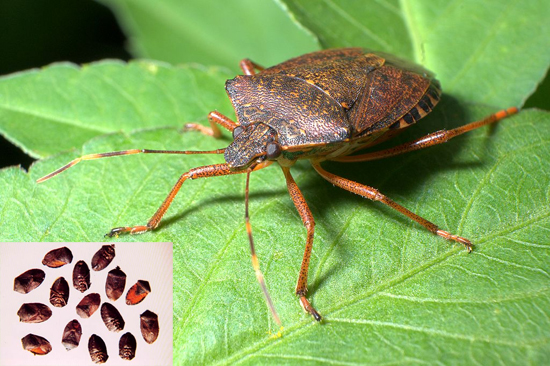
Jiuxiang bug (JIU XIANG CHONG)

Aspongopus chinensis Dallas (Fam. Pertatomidae)
Aspongopus chinensis Dallas (Fam. Pertatomidae)

Pharmaceutical Name:
Aspongopus
Latin Name:
Aspongopus chinensis Dallas (Fam. Pertatomidae)
Common Name:
Jiuxiang bug
Part Used:
Dried body
Aspongopus is produced mainly in the provinces of Yunnan, Sichuan, Guizhou, and Guangxi. It is captured in winter and spring, dried, and stir-baked for use.
Properties  Taste & Meridians:
Salty in flavor, warm in property, acts on the Spleen, Liver, and Kidney channels.
Functions:
Regulates the flow of Qi and relieves pain, warms the Kidney, and restores Kidney Yang.
Indications & Combinations:
1. For epigastric pain with distension due to Cold in the Stomach or due to Qi Stagnation in the Liver and Stomach, it is used with Fructus Meliae Radicis (Chuan Lian Zi), Radix Aucklandiae (Mu Xiang), and Radix Curcumae Yanhusuo (Yan Hu Suo).
2. For Deficient Kidney Yang with pain of the loins and knees or impotence, it is used with Radix Clematidis (Wei Ling Xian) and Fructus Psoraleae (Bu Gu Zhi).
Dosage and administration:
3–5 g, decocted in water for internal use.
Precautions:
Contraindicated in patients with Internal Heat due to Yin Deficiency.

Thursday, July 5, 2012

White-stiff silkworm (Baijiangcan)

Bombyx mori L. (Fam. Bombycidae)
Bombyx mori L. (Fam. Bombycidae)

Pharmaceutical Name: Bombyx Batryticatus
Zoological Name: Bombyx mori L. (Fam. Bombycidae)
Common Name: White-stiff silkworm, body of infected silkworm.
Source of Earliest Record: Shennong Bencao Jing
Part Used & Method for Pharmaceutical Preparations: The silkworm, dead and stiffened due to the infection of beavveria bassiana, is dried in the sun.
Properties & Taste: Salty, pungent and neutral.
Meridians: Liver and lung.
Functions: 1. To subdue endogenous wind and stop spasms; 2. To expel wind and stop pain; 3. To dispel toxins and disperse nodules.
Indications & Combinations:
1. Convulsions due to high fever and epileptic spasms. White-stiff silkworm (Baijiangcan) is used with Arisaema tuber with bile (Dannanxing), Gastrodia tuber (Tianma) and Ox gallstone (Niuhuang) in the formula Qianjin San.
2. Chronic convulsions with prolonged diarrhea due to deficiency of the spleen. White-stiff silkworm (Baijiangcan) is used with White atractylodes (Baizhu), Pilose asiabell root (Dangshen) and Gastrodia tuber (Tianma).
3. Windstroke manifested as deviation of eyes and mouth or facial spasms. White-stiff silkworm (Baijiangcan) is used with Scorpion (Quanxie) and Typhonium tuber (Baifuzi) in the formula Qianzhen San.
4. Wind-heat sore throat. White-stiff silkworm (Baijiangcan) is used with Platycodon root (Jiegeng), Ledebouriella (Fangfeng) and Licorice root (Gancao).
5. Wind-heat headache and lacrimation from exposure to wind. White-stiff silkworm (Baijiangcan) is used with Mulberry leaf (Sangye), Schizonepeta (Jingjie) and Shave grass (Muzei) in the formula Baijiangcan San.
6. Rubella and itching. White-stiff silkworm (Baijiangcan) is used with Cicada slough (Chantui) and Mentha (Bohe).
7. Scrofula. White-stiff silkworm (Baijiangcan) is used with Tendrilled fritillary bulb (Chuanbeimu) and Prunella spike (Xiakucao).
Dosage: 3-10 g, decocted in water for an oral dose. The unprepared herb is best for dispelling Wind Heat.
Cautions & Contraindications: The raw substance is used for wind-heat syndrome, the fried substance for other applications.

Turtle shell (Biejia)


Trionyx sinensis Wiegmann (Fam. Trionychidae)
Trionyx sinensis Wiegmann (Fam. Trionychidae)

Pharmaceutical Name: Carapax Trionycis Sinensis
Zoological Name: Trionyx sinensis Wiegmann (Fam. Trionychidae)
Common Name: Fresh-water turtle shell, Chinese turtle shell.
Source of Earliest Record: Shennong Bencao Jing.
Part Used & Method for Pharmaceutical Preparations: The shell can be removed after the turtle has been boiled for one or two hours.
Properties & Taste: Salty and cold.
Meridian: Liver.
Functions: 1. To nourish yin and subdue yang; 2. To soften hardness and disperse nodules.
Indications & Combinations:
1. Internal stirring of endogenous wind following the later stage of febrile disease in which yin and body fluids are consumed or tendons and muscles are not nourished manifested as tremulous fingers, spasms and convulsions, thready and rapid pulse and dry tongue proper with scanty coating. Turtle shell (Biejia) is used with Oyster shell (Muli), Donkey hide gelatin (Ejiao), Fresh rehmannia root (Shengdihuang) and White peony root (Baishao) in the formula Erjia Fumai Tang.
2. Deficient yin with fever; a) deficient yin and body fluids at the later stage of febrile disease manifested as night fever and subsiding in the morning without sweating and red tongue with scanty coating. Turtle shell (Biejia) is used with Sweet wormwood (Qinghao) and Moutan bark (Mudanpi) in the formula Qinghao Biejia Tang; b) deficient yin with internal heat manifested as afternoon fever and night sweating. Turtle shell (Biejia) is used with Stellaria root (Yinchaihu) and Wolfberry bark (Digupi) in the formula Qinggu San.
3. Chronic malaria with amenorrhea manifested as hypochondriac pain and hard, palpable masses in the epigastric and abdominal regions. Turtle shell (Biejia) is used with Zedoary (Ezhu), Burreed tuber (Sanleng), Moutan bark (Mudanpi) and Rhubarb (Dahuang).
Dosage: 10-30 g, decocted prior to other herbs. For replenishing Yin and suppressing Excess Liver Yang, it is used unprepared; for softening lumps and resolving masses, it is stir-baked with vinegar.
Cautions & Contraindications: Contraindicated in patients with poor appetite or loose stools due to Spleen and Stomach Deficiency; contraindicated during pregnancy.

Wednesday, July 4, 2012

Tortoise plastron (Guiban)


Chinemys reevesii (Gray) (Fam. Testudinidae)
Chinemys reevesii (Gray) (Fam. Testudinidae)

Pharmaceutical Name: Plastrum Testudinis
Zoological Name: Chinemys reevesii (Gray) (Fam. Testudinidae)
Common Name: Tortoise plastron, freshwater tortoise shell.
Source of Earliest Record: Shennong Bencao Jing.
Part Used & Method for Pharmaceutical Preparations: The plastron of a freshwater tortoise can be obtained all year round. It is cleaned and dried in the sun.
Properties: Sweet, salty and cold.
Meridians: Liver, kidney and heart.
Functions: 1. To nourish yin and subdue yang; 2. To tonify the kidneys and strengthen the bones.
Indications & Combinations:
1. Hyperactivity of liver yang due to deficient yin of the liver and kidneys manifested as dizziness, distension and pain in the head and blurred vision. Tortoise plastron (Guiban) is used with Cyathula root (Niuxi), White peony root (Baishao), Sea-ear shell (Shijueming) and Uncaria stem (Gouteng).
2. Malnutrition of tendons and muscles due to yin consumed by febrile diseases manifested as spasms and convulsions of hands and feet. Tortoise plastron (Guiban) is used with Fresh rehmannia root (Shengdihuang), Donkey hide gelatin (Ejiao) and Oyster shell (Muli).
3. Deficient yin and excessive fire manifested as afternoon fever, cough with blood, night sweating and seminal emissions. Tortoise plastron (Guiban) is used with Prepared rehmannia root (Shudihuang) in the formula Da Buyin Wan.
4. Deficient yin of the liver and kidney manifested as soreness and weakness of the lower back and knees and fragile bones and tendons. Tortoise plastron (Guiban) is used with Cyathula root (Niuxi), Dragon's bone (Longgu) and Prepared rehmannia root (Shudihuang).
5. Derangement of mind by deficiency of yin and blood manifested as insomnia, forgetfulness, palpitations and fright. Tortoise plastron (Guiban) is used with Grass-leaved sweetflag (Shichangpu), Dragon's bone (Longgu), and Polygala root (Yuanzhi) in the formula Kongsheng Zhenzhong Dan.
6. Deficient yin and heat in the blood manifested as excessive menstruation and uterine bleeding. Tortoise plastron (Guiban) is used with Fresh rehmannia root (Shengdihuang) and Eclipta (Mohanlian).
Dosage: 10-30 g decocted prior to other herbs for internal use.
Cautions & Contraindications:
1. This herb should be used with caution during pregnancy.
2. Contraindicated in patients with Cold due to Spleen and Stomach Deficiency.

Monday, July 2, 2012

Tiger's bone (Hugu)

Panthera tigris L. (Family: Felidae)
Panthera tigris L. (Family: Felidae)

Pharmaceutical Name: Os tigris
Zoological Name: Panthera tigris L. (Family: Felidae)
Common Name: Tiger's bone
Source of Earliest Record: Mingyi Bielu.
Part Used & Method for Pharmaceutical Preparations: The fresh bone is dried in the shade, and then pounded into small pieces or soaked in wine or made into pills or powder.
Properties & Taste: Pungent and warm.
Meridians: Liver and kidney.
Functions: 1. To dispel wind and dampness and stop pain; 2. To strengthen tendons and bones.
Indications & Combinations:
1. Wind-damp obstruction syndrome manifested as rheumatic pain, spasm of the limbs and motor impairment of joints. Tiger's bone (Hugu) is used with Chaenomeles fruit (Mugua), Cyathula root (Niuxi), Mulberry twigs (Sangzhi), Acanthopanax bark (Wujiapi) and Teasel root (Xuduan) in the formula Hugu Mugua Jiu.
2. Deficient liver and kidney manifested as fragile bones and tendons and weakness of the limbs. Tiger's bone (Hugu) is used with Cyathula root (Niuxi) and Prepared rehmannia root (Shudihuang) in the formula Hu Qian Wan.
Dosage: 3-6 grams in pills, tinctures or powders (Chen).
    Toxicity and Overdose: None Noted
    Contraindications and Cautions: Use with caution in cases of Fire from Excess or Deficiency.

Saturday, June 30, 2012

Silkworm excrement (Cansha)

Excrementum Bombycis mori

Pharmaceutical Name: Excrementum Bombycis mori
Zoological Name: Bombys mori L. (family Bombycidae)
Common Name: Silkworm excrement.
Source of Earliest Record: Mingyi Bielu.
Part Used & Method for Pharmaceutical Preparations: Silkworm excrement is collected from June to August, then dried in the sun.
Properties & Taste: Pungent, sweet and warm.
Meridians: Liver, spleen and stomach.
Functions: 1. To dispel wind and dampness; 2. To harmonize the stomach and transform dampness.
Indications & Combinations:
1. Damp-heat obstruction syndrome.Silkworm excrement (Cansha) is used with Tetrandra root (Fangji), Coix seed (Yiyiren) and Talc (Huashi) in the formula Xuanbi Tang.
2. Turbid dampness blocking the spleen and stomach manifested as vomiting, diarrhea, cramps and abdominal pain. Silkworm excrement (Cansha) is used with Chaenomeles fruit (Mugua), Scutellaria root (Huangqin) and Evodia fruit (Wuzhuyu) in the formula Canshi Tang.
3. Eczema. The decoction of the herb is used for external washing.
Dosage: 5-10 g, decocted in water for an oral dose.
Precautions: None noted.

Sea-ear shell (Shijueming)

Haliotis diversicolor Reeve (Fam. Haliotid
Haliotis diversicolor Reeve (Fam. Haliotidae).

Pharmaceutical Name: Concha Haliotidis
Zoological Name: 1. Haliotis diversicolor Reeve; 2. Haliotis discushannai lno; 3. Haliotis ovina Gmelin; 4. Haliotis ruber (Leach); 5. Haliotis asinina L.; 6. Haliotis laevigata (Donovan) (Fam. Haliotidae).
Common Name: Abalone shell, Sea-ear shell, Haliotis shell.
Source of Earliest Record: Mingyi Bielu.
Part Used & Method for Pharmaceutical Preparations:
Shell.
Concha Haliotidis is produced chiefly in Guangdong and Fujian. It is captured in summer and autumn, dried in sunlight after being cleaned, and used unprepared or calcined.
Properties & Taste: Salty and cold.
Meridian: Liver.
Functions: 1. To pacify the liver and subdue yang; 2. To clear the fire in the liver and brighten the eyes.
Indications & Combinations:
1. Deficient yin of the liver and kidneys and hyperactivity of liver yang: a) dizziness, vertigo and blurred vision manifestations Sea-ear shell (Shijueming) is used with Oyster shell (Muli), White peony root (Baishao) and Tortoise plastron (Guiban) to nourish yin and subdue yang; b) distending sensation of the head and eyes, headache, eye pain and red face manifestations Sea-ear shell (Shijueming) is used with Uncaria stem (Gouteng), Chrysanthemum flower (Juhua) and Prunella spike (Xiakucao) to pacify the liver and clear heat.
2. Flaring up of liver fire manifested as red, swollen and painful eyes and blurred vision. Sea-ear shell (Shijueming) is used with Chrysanthemum flower (Juhua) and Cassia seed (Juemingzi).
3. Deficiency of liver blood manifested as chronic blurred vision and dryness of the eyes. Sea-ear shell (Shijueming) is used with Prepared rehmannia root (Shudihuang) in the formula Shijueming Wan.
Dosage: 15-30 g, decocted in water before other ingredients.
Precautions: None noted.

Sea clam shell (Haigeqiao)


Cyclina sinensis Gmelin  (Family Veneridae)
Cyclina sinensis Gmelin  (Family Veneridae) 

Pharmaceutical Name: Concha Meretricis seu Cyclinae
Zoological Name: 1. Cyclina sinensis Gmelin  (Family Veneridae) ; 2. Meretrix meretrix L. (Family Veneridae)
Common Name: Clam shell.
Source of Earliest Record: Shennong Bencao Jing
Part Used & Method for Pharmaceutical Preparations: The clam shells are collected from the seashore and pounded into powder.
Properties & Taste: Bitter, salty and cold.
Meridians: Lung and stomach.
Functions: 1. To clear heat in the lungs and resolve phlegm; 2. To soften hardness and release nodules.
Indications & Combinations:
1. Phlegm-heat cough manifested as cough with thick yellow sputum, asthma, chest pain and hypochondriac pain. Sea clam shell (Haigeqiao) is used with Costazia bone (Haifushi), Mulberry bark (Sangbaipi), Swallowwort rhizome (Baiqian), Capejasmine (Zhizi) and Trichosanthes fruit (Gualou).
2. Scrofula and goiter. Sea clam shell (Haigeqiao) is used with Seaweed (Haizao), Laminaria (Kunbu) and Ark shell (Walengzi) in the formula Hanhua Wan.
Dosage: 10-15 g, decocted in water for an oral dose.
Cautions & Contraindications: This substance is normally used in powdered form and should be placed in a cloth bag for decoction or removed from the decoction with a strainer.

Wednesday, June 27, 2012

Scorpion (Quanxie)


Buthus martensi Karsch. (Fam. Buthidae)
Buthus martensi Karsch. (Fam. Buthidae)

Pharmaceutical Name: Scorpio
Zoological Name: Buthus martensi Karsch. (Fam. Buthidae)
Common Name: Scorpion
Source of Earliest Record: Kaibao Bencao
Part Used & Method for Pharmaceutical Preparations: The scorpion is caught in spring or autumn and then boiled and dried in the sun.
Properties & Taste: Pungent, neutral and toxic.
Meridian: Liver.
Functions: 1. To subdue endogenous wind and stop spasms; 2. To dispel toxins; 3. To dispel wind and stop pain.
Indications & Combinations:
1. Convulsions due to high fever or epileptic spasms. Scorpion (Quanxie) is used with Centipede (Wugong) in the formula Zijing San.
3. Tetanus manifested as spasms of the limbs and opisthotonos. Scorpion (Quanxie) is used with Arisaema tuber (Tiannanxing) and Cicada slough (Chantui) in the formula Wuhu Zhuifeng San.
2. Facial paralysis manifested as deviation of the eye and mouth and incomplete closing of the eyelids. Scorpion (Quanxie) is used with Typhonium tuber (Baifuzi) and White-stiff silkworm (Baijiangcan) in the formula Qianzhen San.
4. Chronic convulsions caused by chronic diarrhea due to deficiency of the spleen manifested as spasms of the hands and feet. Scorpion (Quanxie) is used with Pilose asiabell root (Dangshen), White atractylodes (Baizhu) and Gastrodia tuber (Tianma).
5. Stubborn headache and rheumatic pain.Scorpion (Quanxie) is used with Centipede (Wugong) and White-stiff silkworm (Baijiangcan).
Dosage: 2-5 g; ground into powder for swallowing, 0.6–1 g, each time. Appropriate amount for external use.
Cautions & Contraindications: Scorpio is poisonous and is not to be given in large dosages. Use cautiously in patients with endogenous Wind due to Blood Deficiency.

Monday, June 25, 2012

Rhinoceros horn (Xijiao)


Rhinoceros unicornis L.-Family: Rhinocerotidae
Rhinoceros unicornis L.-Family: Rhinocerotidae

Pharmaceutical Name: Cornu Rhinoceri
Common Name: Rhinoceros horn, Greater One-horned Rhino, Great Indian Rhinoceros, Indian Rhinoceros.
Zoological Name: 1. Rhinoceros unicornis L.; 2. Rhinoceros sondaicus Desmarest; 3. Rhinoceros sumatrensis (Fischer) - Family: Rhinocerotidae
Source of Earliest Record: Shennong Bencao Jing.
Part Used & Method for Pharmaceutical Preparations: The horn of the African rhinoceros is sawn into small pieces. Then, the pieces are steamed or boiled and cut into slices or ground into powder.
Properties & Taste: Bitter, salty and cold.
Meridians: Heart, liver and stomach.
Functions: 1. To clear heat and relieve convulsions; 2. To cool blood and release toxins.
Indications & Combinations:
1. Fever, unconsciousness, delirium and convulsions. Rhinoceros horn (Xijiao) is used with Isatis leaf (Daqingye), Gypsum (Shigao) and Antelope's horn (Lingyangjiao).
2. Hemorrhagic disease due to extravasation of blood by heat manifested as vomiting with blood, epistaxis and subcutaneous bleeding. Rhinoceros horn (Xijiao) is used with Moutan bark (Mudanpi), Fresh rehmannia root (Shengdihuang) and Red peony (Chishao).
Dosage: 1.5-6 g
Cautions & Contraindications:Rhinoceros horn should not be mixed with Wild aconite root (Caowu) and Monkshood root (Chuanwu), and it must be used with caution during pregnancy.
Note: Although rhinoceros horn is a traditional medicinal substance, its scarcity encourages the common substitution of water buffalo's horn.